
The prickly pear cactus: A striking plant that closely resembles a cactus and is commonly associated with arid, dry landscapes. Our friends in Crete are especially lucky, as it often grows wild near the beaches!
Prickly pears are an excellent choice to enjoy as fresh fruit or to add to salads —provided someone can show us when they are ripe. Beyond their sweet taste, they are rich in taurine, amino acids, easily absorbable carbohydrates, minerals, vitamin C, and dietary fiber (1). Furthermore, scientific studies have provided strong evidence that prickly pear reduces glucose and cholesterol levels in the human bloodstream and modifies the composition of low-density lipoprotein (LDL) (2).
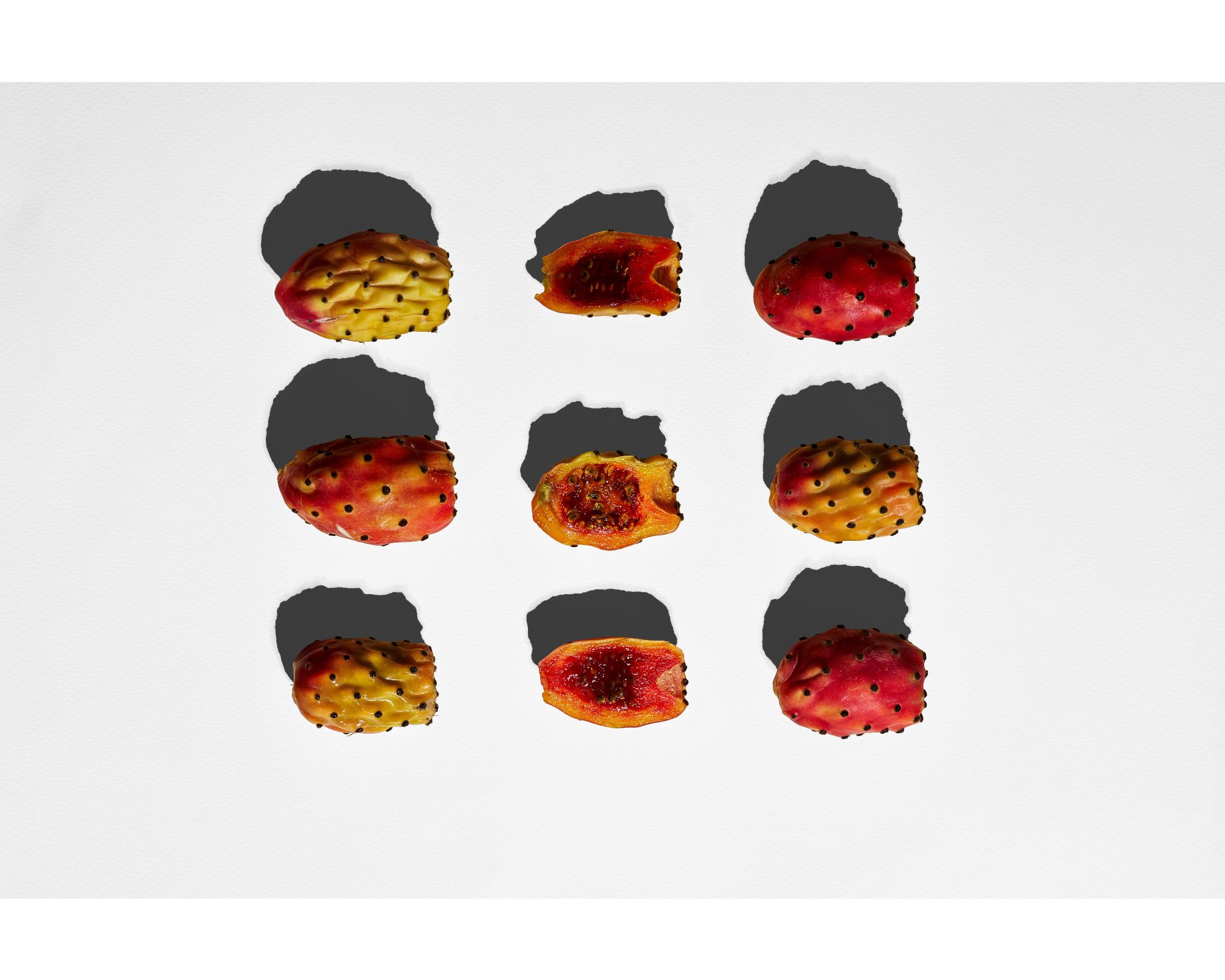
But what about prickly pear oil? And how beneficial is it for our skin?
Opuntia (prickly pear) oil: It is an oil obtained through the cold pressing of the plant’s seeds (1). To better understand the importance of cold pressing, let us briefly explain the process: Cold pressing is a method in which high pressure is applied to the plant seeds using a special press, allowing the oil naturally contained within the seeds to be extracted—we practically ‘squeeze them dry’ 🙂. This process takes place at very low temperatures. What is the benefit of this? The oil retains all of its nutritional components.
Chemical analysis of prickly pear oil has shown that it contains an exceptionally high percentage of linoleic acid.
Its linoleic acid content ranges from an impressive 49.7% up to as much as 70% in some cases (3). Other fatty acids are also present in significant amounts, including oleic acid (18.8% to 21.81%) and palmitic acid (13.75%) (4). It also contains flavonoids and tannins.
In addition, the oil is very rich in vitamin E and has a high content of polyphenols. The combination of these two components is particularly important, as together with vitamin E they provide the oil with strong antioxidant activity (3).
Without any doubt, it is an exceptionally rich oil.
But its distinctive qualities do not stop there: It is not only the impressive percentages of fatty acids it contains that matter, the even more important factor is their ratio to one another!
In particular, the ratio of linoleic acid to oleic acid, which is notably high in prickly pear oil (4).
Why is this ratio important for us?
Among the most important components of human skin are lipids (remember the article about the skin barrier? Lipids are the “cement” of the wall). It has been observed that in various skin conditions, the proportions of fatty acids in the skin are disrupted, and as a result, the skin barrier loses its integrity (5). The skin then becomes more susceptible to bacterial penetration and, consequently, to increased irritation.
What do we achieve with a high linoleic-to-oleic acid ratio?
In very simple terms, a high linoleic-to-oleic acid ratio promotes the repair of the skin barrier. The “gaps” are filled, and the skin not only becomes stronger but also smoother. As a pleasant side effect, sensitive skin becomes… less sensitive. When the skin barrier has no gaps, it is stronger and performs its role more effectively: acting as a protective barrier between the skin and the environment. In this way, it prevents the entry of bacteria and protects the skin from minor as well as more severe irritations.
Smoother skin means healthier skin (5). In other words, the skin not only remains healthy but also appears immediately more radiant. An added bonus is that since fine lines and wrinkles are formed primarily at the level of the skin barrier, maintaining its strength makes wrinkle formation more difficult—saving us from the need for additional anti-aging products.
In our article “Lifting Effect – Is it possible to achieve this (only) by using cosmetics?” we explain that the action of anti-wrinkle products takes place in the middle layer of the skin, the dermis, where collagen and elastin are found. As we have mentioned many times, since the skin renewal cycle lasts 2–4 months, there is no (absolutely no) anti-wrinkle ingredient that can deliver permanent results in a shorter period of time.
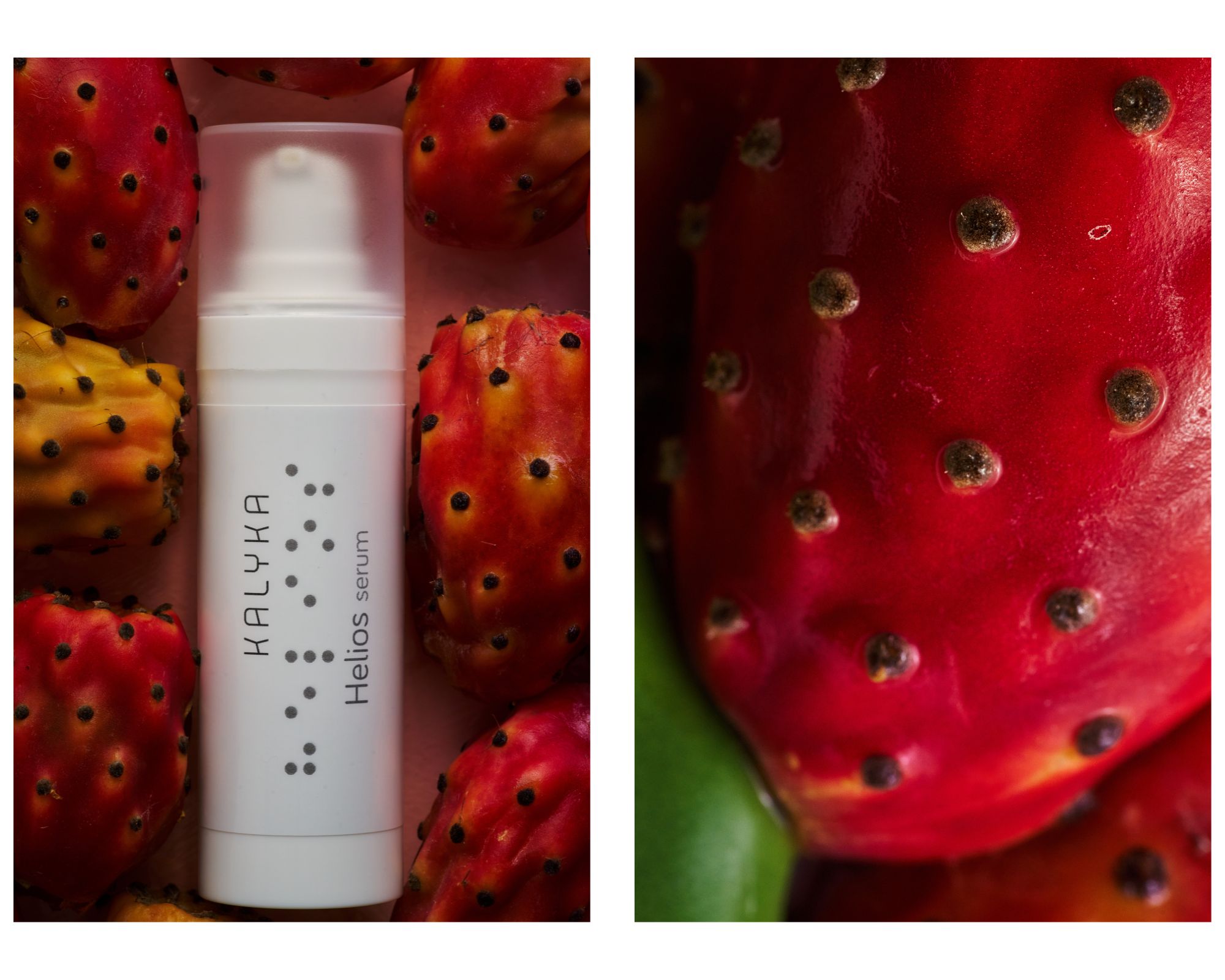
Incorporate prickly pear oil into your skincare routine. In our own range, you will find it in the HELIOS serum. It is a unisex product that absorbs in seconds, leaving your skin feeling like it does after drinking a refreshing glass of water post-workout. The comfort and radiance it delivers will be noticeable from the very first application.
References:
- F. Ramadan, J -T Mörsel, Food Chemistry 2003, 82, 339–345
- Gurbachan, P. Felker Cactus: new world foods. Indian Horticulture, 1998, 43(1), 29–31
- Z. Ghanemi, A. Nani, D. Patoli, D. Khaldi, Z. Mami, M. Belarbi J Nat Prod Res App 2022, 2 (1) : 54-66
- Ettalibi, A.El Antari, A. Hamouda, C. Gadhi, H. Harrak Journal of Food Quality Volume 2021, Article ID 3098608, 8 pages
- https://pmc.ncbi.nlm.nih.gov/articles/PMC8420999/