
The active ingredients are the most “advertised” part of a cosmetic product. In our KALYKA COSMETIC line, we want our formulas to be as natural as possible and for this reason we use powerful anti-wrinkle and moisturizing active ingredients, the vast majority of which are of plant origin.
But which cosmetic ingredients are the ones that will motivate us to use a product? They are those that make the cosmetic suitable for our own skin and give us an immediate feeling of comfort.
The work of active ingredients usually becomes visible in the long term. As we have mentioned, the skin’s renewal cycle takes place every two to four months, so there is no (absolutely no) active ingredient that can deliver permanent results in a shorter period of time.
The ingredients that motivate us to incorporate a cosmetic product into our daily routine are usually found in the main body of the formulation. The good news is that, in the vast majority of cases, they are more affordable ingredients and not so difficult to find! Inevitably, these are the ones that will “draw us in” and convince us to include a product in our routine, as they are the first to make us feel comfortable — because we’ll say it again and again: the most fundamental prerequisite for beauty is “comfort.”
Those of you who have looked closely at the ingredients of our cosmetics may have already noticed that we have our weaknesses… even when it comes to oils. Here, we’ll talk about two of them.
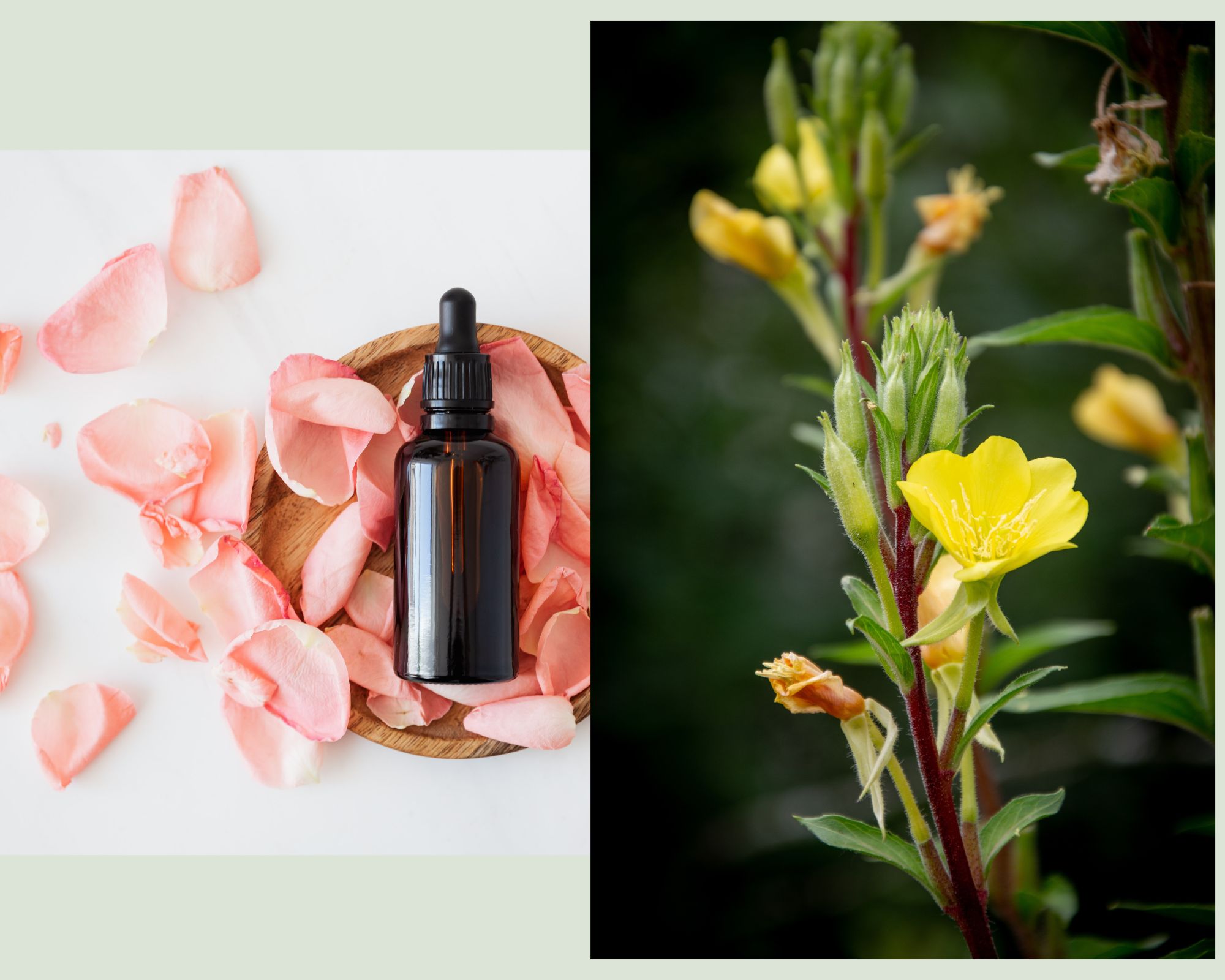
Evening Primrose Oil
If luxury were an oil, it would be bottled as evening primrose oil. It is one of the oils most closely associated with luxury products.
How is it produced?
It is obtained through the cold pressing of the plant’s seeds. This is a process in which the seeds pass through a special press. Essentially, they are “squeezed” to extract the oil. With this method, great importance is placed on preserving all the plant’s components, which is why it takes place under very mild temperature and pressure conditions. Of course, this comes at a cost to the quantity of oil produced. To give you an idea, from 100 grams of seeds, an average of only 17 grams of oil are produced! So you can understand how precious it is.
What does it contain?
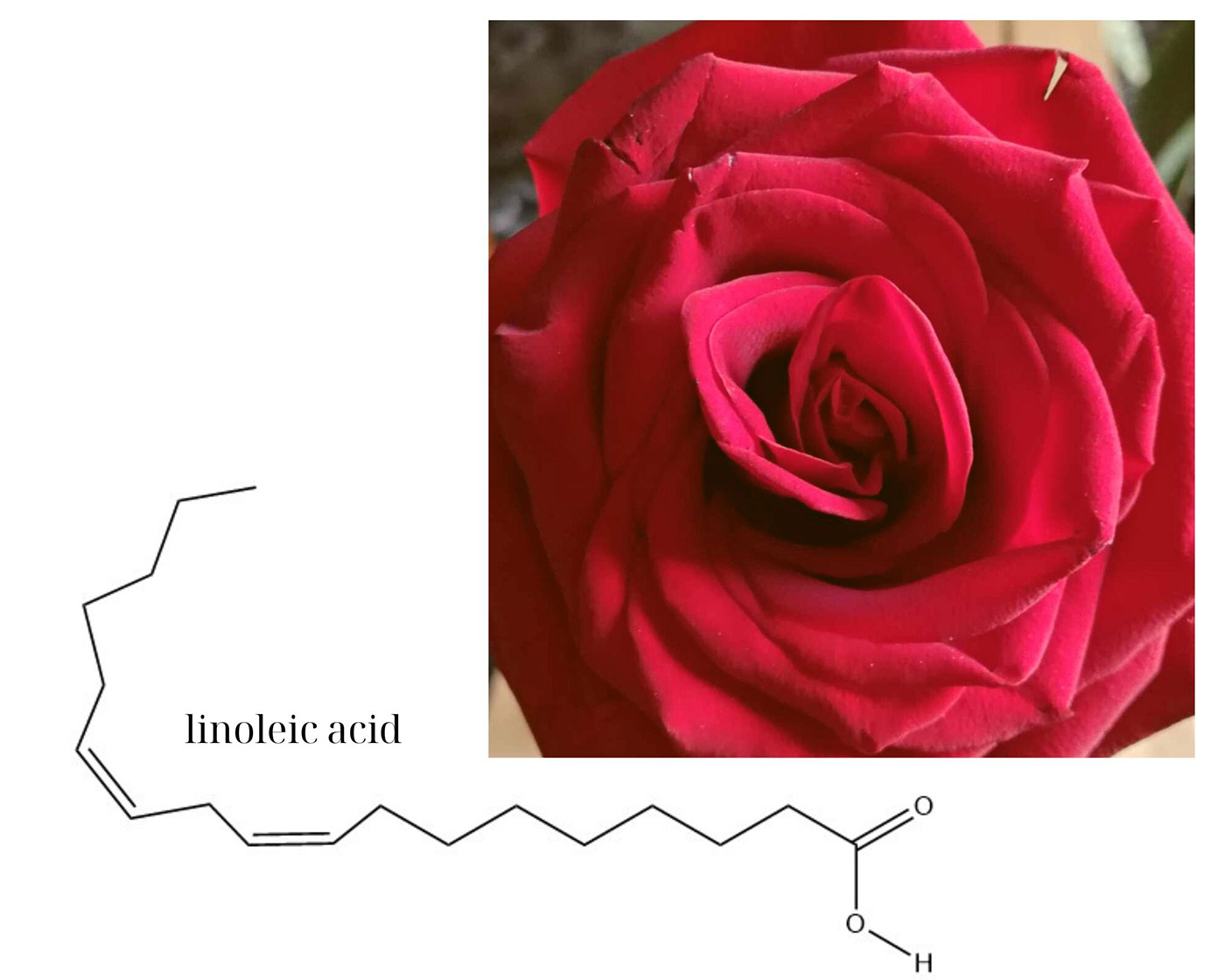
It contains an exceptionally high percentage of linoleic acid, which in some cases reaches up to 80%. Linoleic acid belongs to the essential fatty acids because our body cannot produce it and we obtain it only through our diet. It has anti-inflammatory properties, and its presence is essential for the proper function of tissues. In the skin, even more so, as it is one of the key structural components of the skin barrier. This means it helps retain water within the skin and keeps the skin barrier strong and smooth.
Within this 80% of linoleic acid, γ-linolenic acid (GLA) is present in an unusually high concentration of 9%.
It contains beta-sitosterol at a percentage of 64%.
It also contains a large amount of vitamin E. Let us remember here that vitamin E is not a single compound but a category of compounds. Of the vitamin E found in evening primrose oil, a significant 27% is in the form of alpha-tocopherol, which is the most active form of vitamin E. This means that evening primrose oil has excellent antioxidant capacity and neutralizes free radicals.
Why is evening primrose oil important to us?
The properties of this delicate oil are numerous.
Like the rose oil mentioned above, is a non-comedogenic oil. Therefore, it does not clog pores and is easily absorbed, even by oily skin.
It has anti-inflammatory action, meaning it soothes irritated or itchy skin.
What did we see above? That it contains an impressive percentage of linoleic acid. How does this benefit us? The skin barrier remains strong, so the skin does not flake and appears smoother. Water also stays within the skin. Obviously, evening primrose oil is ideal for all skin types, but for this reason alone, dry skin will “notice” its benefits even more quickly.
It also has excellent anti-wrinkle properties and is an ideal addition to a product designed for mature skin. Why? Because, as we saw above, it has very strong antioxidant capacity and neutralizes free radicals. But also for another reason you may grow tired of hearing me repeat: wrinkles form on the skin barrier. The exceptionally high percentage of linoleic acid keeps the skin barrier strong and helps retain moisture. When the skin barrier is strong, it remains more resilient and is less prone to forming wrinkles.
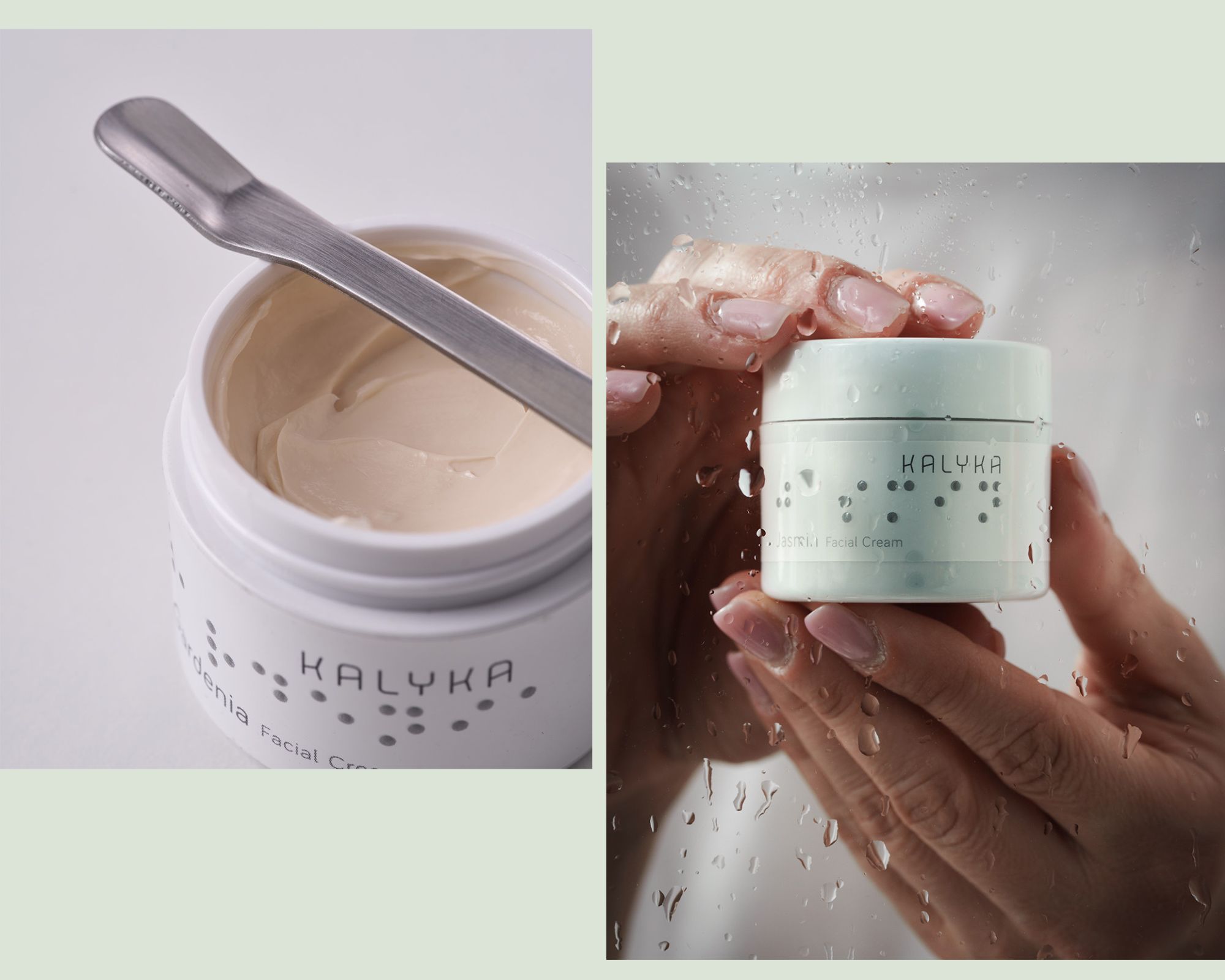
Anyone who knows me immediately understands my personal favorotes! I designed the GARDENIA face cream especially for myself, for my own dry skin. It was inevitable that it would include both of the oils mentioned above. Since I have dry skin and, when I was younger, could never find products that truly satisfied me, I had decided that I would make no compromises when it came to my own face.
When the JASMIN face cream was created for combination skin, I wasn’t willing to make any “compromises” there either. Rose oil and evening primrose oil absolutely had to fit into the formula. And of course, we made it happen! We created a rich face cream for combination skin. Does that sound like a contradiction? And yet, it’s possible! One try will convince you.
References
1. “Pharmaceutical Potential Evaluation of Damask Rose
By-Products from Volatile Oil Extraction” N. Charoimek, P. Sunanta, T. Tangpao, R. Suksathan, W. Chanmahasathien, S. Sirilun, Kuo-Feng Hua, Hsiao-Hang Chung, S.R. Sommano, T. Junmahasathien Plants 2024, 13, 1605.
2. “Evaluation of anti‑aging and antioxidant properties of a new rose variety, Ever‑rose” S.J. Han, P. Belousova, S. Kwon, J. Jang, J.B. Lee, H. Kim, G. You,
J. Song, H. Mok, Ho Su Ha, S.J. Bae, In Jin Ha, Min Young Lee, Kyung Sook Kim Chem. Biol. Technol. Agric. 2024, 11:119 https://doi.org/10.1186/s40538-024-00653-2
3. “Methanolic Extracts of Rose Flowers (Rosa chinensis Jacq.): Phytochemical Evaluation and Total Antioxidant Capacity” N.T. Simatupang, D. Limanan, E. Yulianti, F. Ferdinal Advances in Health Sciences Research, 2021, 41, 29.
4. An updated review on efficacy and benefits of sweet almond, evening primrose and jojoba oils in skin care applications J. Blaak, P. Staib Int. J. Cosmet. Sci. 2022, 44, 1.
5. STUDIES ON THE CULTIVATION AND USES OF EVENING PRIMROSE
(OENOTHERA SPP.) IN CHINA Economic Botany, July 2001